Booking a trip
Student field trips are booked through the Heritage Education Program, separate from general admission — reach out directly to schedule a visit for your class or group. Book at least a month ahead to secure your preferred date, and plan for a minimum of two hours on site.
Heritage Education Coordinator
Brenda Benoit
(985) 764-9315, ext. 3
brenda@destrehanplantation.org →Resources for teachers
Grade-by-grade classroom materials aligned to Louisiana Social Studies standards, carried over from the current site.
K–3 curriculum guides
Louisiana Social Studies resources for kindergarten through third grade are available directly from the Heritage Education Program.
Request K–3 guides →Grades 4–7 curriculum guides
Ask the Heritage Education Program for grade-specific classroom resources for fourth through seventh grade.
Request grades 4–7 guides →Visit materials & answer key
Educational visit questionnaires and answer keys are available when planning a class trip.
Request visit materials →1811 Uprising quiz
Request the student quiz and answer key for classroom discussion of the German Coast Uprising.
Request the quiz →Teacher in-service opportunities
Direct coordination between classroom teachers and the plantation's Heritage Education Program coordinator to plan a visit around your curriculum.
Vocabulary & suggested reading
Extend the visit in the classroom with a vocabulary list and suggested reading materials.
Request reading materials →Program rates & booking
For current field-trip pricing, scheduling, and program questions, contact the Heritage Education Program directly.
Brenda Benoit
Heritage Education Coordinator
(985) 764-9315, ext. 3
brenda@destrehanplantation.org
What happens on the tour
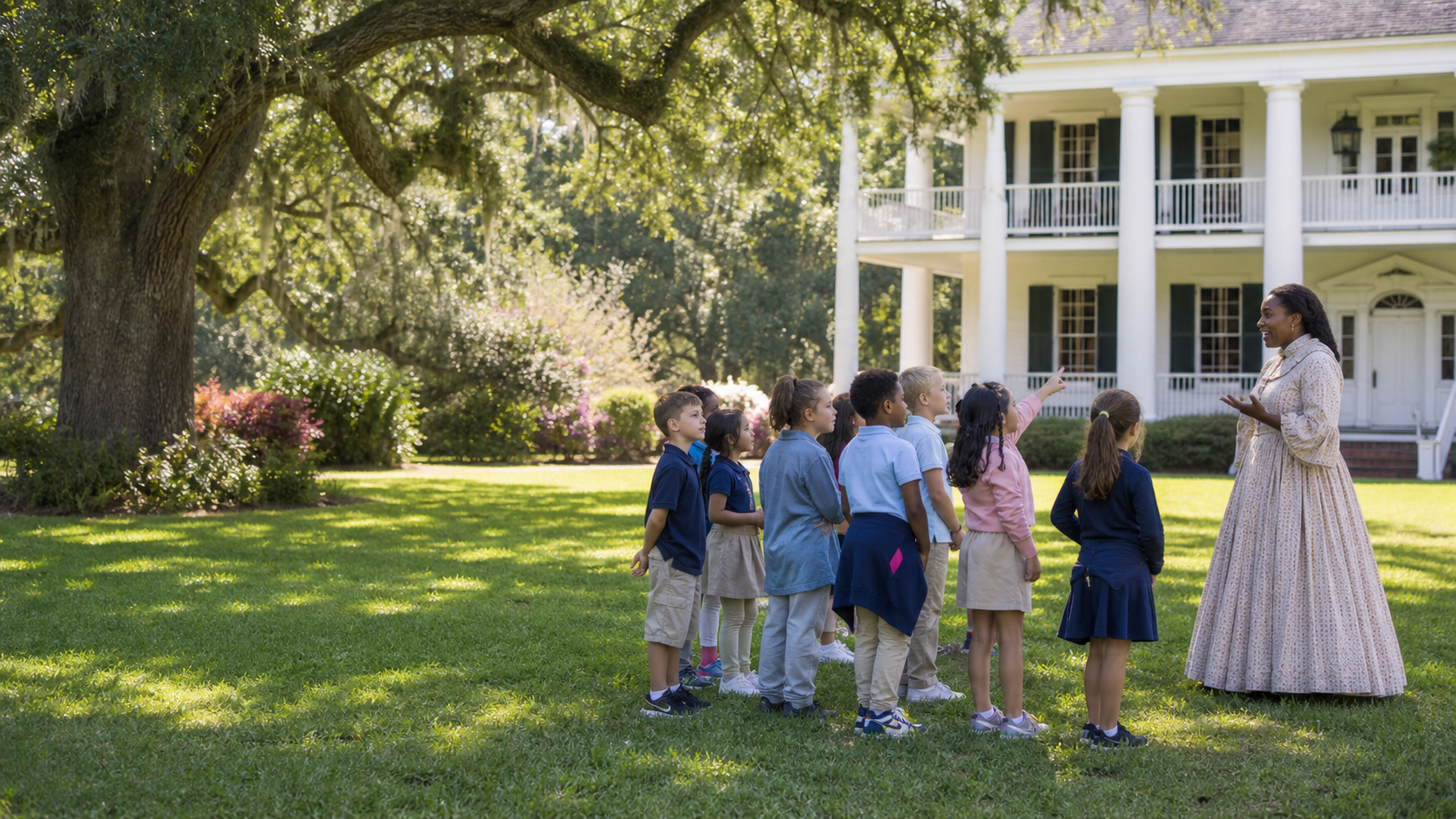
Costumed historical interpreters lead the visit, drawing direct connections between plantation life and today.
Guided by historical interpreters
Interpreters educate students about the lives of those who lived on the plantation, both free and enslaved, and relate colonial and early-statehood life to contemporary times.
Hands-on & research-based
Students interact directly with interpreters, develop research opportunities, and witness folk-life demonstrations during the visit.
Classroom follow-up
Online resource materials and social media channels extend the learning after the trip.